


If you drive a car made in the last decade, chances are your vehicle is equipped with Advanced Driver Assistance Systems (ADAS). These are the safety technologies that help you stay in your lane, alert you to vehicles in your blind spot, and even apply the brakes in an emergency. What many drivers don’t realize is that many of these systems rely on cameras and sensors mounted directly on or near the windshield.
So what happens when your windshield needs to be replaced? That’s where ADAS recalibration comes in, and it’s a step you absolutely cannot skip.
What Is ADAS?
ADAS stands for Advanced Driver Assistance Systems, a collection of electronic technologies that assist drivers with safety and navigation. These systems use a combination of cameras, radar, ultrasonic sensors, and LiDAR to monitor the road and surroundings in real time.
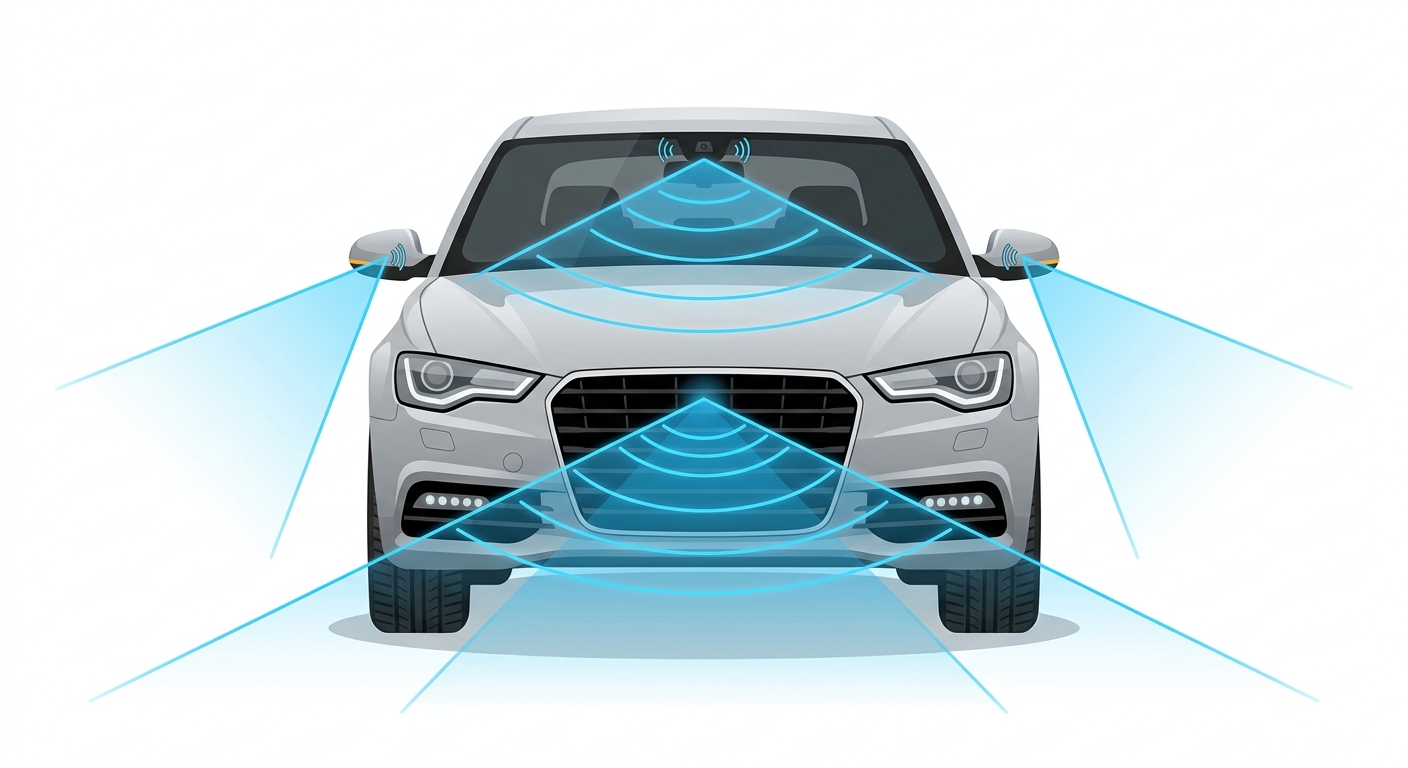
Common ADAS features include:
- Forward Collision Warning (FCW): Alerts you when you’re approaching another vehicle too quickly
- Automatic Emergency Braking (AEB): Applies the brakes automatically to prevent or reduce the severity of a collision
- Lane Departure Warning (LDW): Notifies you if your vehicle begins to drift out of its lane
- Lane Keep Assist (LKA): Actively steers the vehicle back into the lane
- Adaptive Cruise Control (ACC): Maintains a set speed while adjusting for traffic ahead
- Blind Spot Monitoring: Warns you of vehicles in your blind spots
- Rain-Sensing Wipers: Automatically activates wipers based on moisture detected on the windshield
Most of these features depend on a forward-facing camera mounted behind the rearview mirror on the windshield. This camera is the eyes of the system, and its alignment is critical.
What Is ADAS Recalibration?
ADAS recalibration is the process of realigning and reprogramming the cameras and sensors on your vehicle after a windshield replacement, collision repair, or other service that may have affected the position of these components.
Even a slight shift of just one degree in the camera’s position can translate to several feet of error at highway speeds. That means your lane departure system could give false warnings, your emergency braking could activate too late (or too early), and your adaptive cruise control might not react properly to the car ahead.
Why Is Recalibration Necessary After a Windshield Replacement?
When your windshield is replaced, the ADAS camera module is removed and then reinstalled on the new glass. Even though technicians take great care during installation, the camera is no longer in its factory-calibrated position. The new windshield may have microscopic differences in thickness, curvature, or optical clarity compared to the original, all of which can affect how the camera perceives the road.
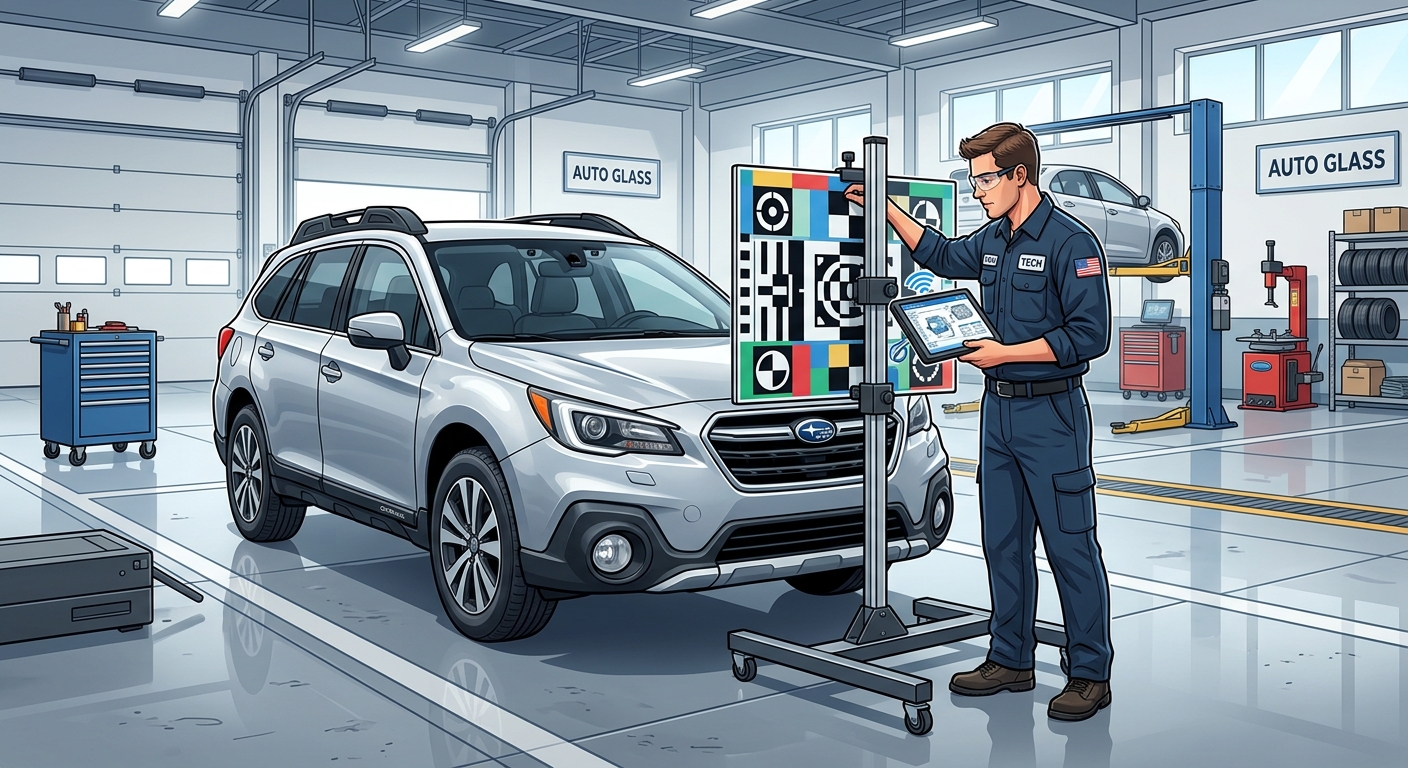
Without recalibration, your safety systems may not function correctly. This isn’t just a convenience issue. It’s a safety issue that could put you and your passengers at risk.
Types of ADAS Calibration
There are two main types of ADAS calibration:
1. Static Calibration
Performed indoors in a controlled environment. The technician positions specific targets and patterns at precise distances and angles from the vehicle. The ADAS system uses these targets to recalibrate the camera. This method requires specialized equipment and a level surface.
2. Dynamic Calibration
Performed by driving the vehicle on well-marked roads at specific speeds. The system uses road markings, lane lines, and other visual cues to recalibrate itself. Some vehicles require both static and dynamic calibration for a complete reset.
The type of calibration required depends on the vehicle make, model, and year. Some vehicles require static only, some dynamic only, and some require both.
What Happens If You Skip Recalibration?
Skipping ADAS recalibration after a windshield replacement can have serious consequences:
- False alerts: Your systems may trigger warnings when there’s no danger
- Delayed reactions: Emergency braking or collision warnings may activate too late
- System failures: Some ADAS features may stop working entirely
- Increased accident risk: Misaligned sensors can’t protect you the way they’re designed to
- Failed inspections: Some states are beginning to include ADAS functionality in vehicle inspections
Does Your Vehicle Need ADAS Recalibration?
If your vehicle has any of the following features, it likely requires recalibration after a windshield replacement:
- Forward collision warning or automatic braking
- Lane departure warning or lane keep assist
- Adaptive cruise control
- A camera mounted on or near the windshield
- Head-up display (HUD)
- Rain-sensing wipers
Most vehicles from 2015 and newer have at least one ADAS feature that requires recalibration. If you’re not sure, our team can help you determine whether your vehicle needs it.
Trust Auto Glass World With Your ADAS Recalibration
At Auto Glass World, we understand that a windshield replacement is more than just swapping out glass. We ensure that every replacement includes proper ADAS recalibration when required, so your safety systems work exactly as they should.
Our certified technicians use OEM-approved calibration equipment and follow manufacturer specifications for every vehicle we service. Your safety is our top priority.
Need a windshield replacement? Schedule your service today and we’ll take care of everything, including ADAS recalibration.